
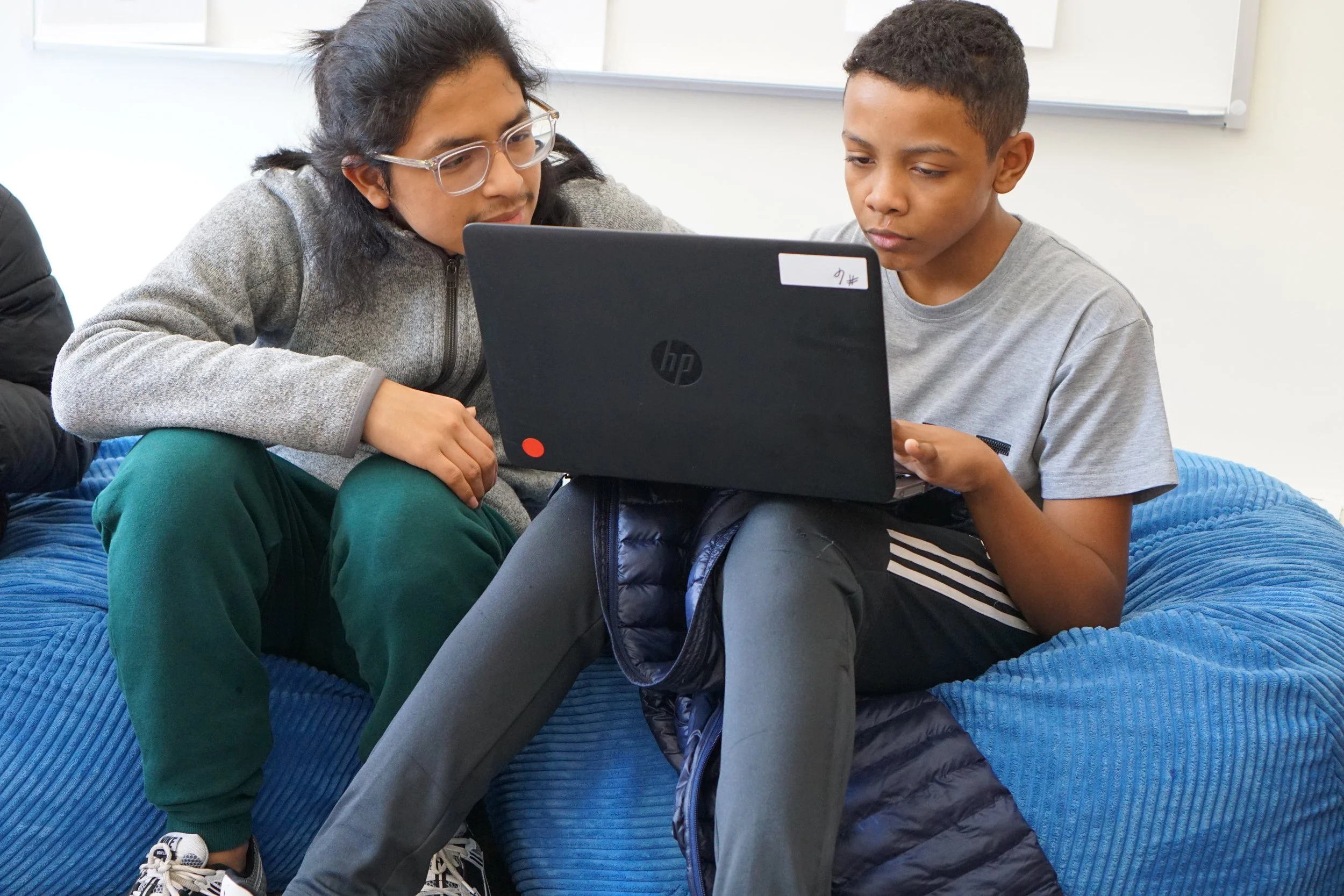
Welcome to the BEAM Blog!

Fun at the waterpark
Fieldtrip to the waterpark!
Students at BEAM Summer Away Union College enjoy a day at the waterpark!





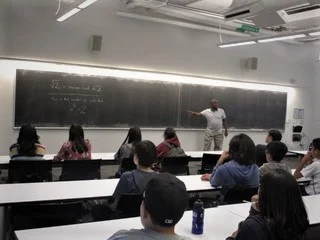
Mathematician Edray Goins Visits BEAM at Harvey Mudd
Edray Goins Visits BEAM Harvey Mudd
This weekend, Dr. Edray Goins, mathematics professor at Pomona College, gave a brilliant talk to students and faculty at BEAM Summer Away at Harvey Mudd College. Dr. Goins grew up in Los Angeles just like our students and graduated from two of the best universities in the country, California Institute of Technology and Stanford University. Dr. Goins explored with students how the geometric mean and recursive sequences of numbers can be used to find an algorithm for square roots. Students left not only inspired to continue their journey in mathematics, but also driven to keep learning new techniques in math. BEAM students Maxine and Karla said of Dr. Goin’s presentation: “Many new ideas and theories were presented in a way that was straight forward and precise.”
Thank you, Dr. Goins, for truly inspiring us!

Interested in getting to know Dr. Goins better? Check out this profile of him, featured in The New York Times in February.
Welcome to BEAM Summer Away at Union College!
Our program at Union College starts tomorrow! More updates are coming soon.

Welcome to BEAM Summer Away at Bard College!
Our program at Bard College starts tomorrow! More updates are coming soon.


BEAM Discovery LA: A fantastic first week
Students did great work the first week of BEAM Discovery LA!
Students did great work the first week of BEAM Discovery LA!
Each week students can choose to work on the Problem of the Week on their own or with others. The first week, 27 students solved the problem, 10 within the first two days!
Are you up to the challenge? Find out:
Is there a 10-digit number where the first digit is equal to how many 0s are in the number, the second digit is equal to how many 1s are in the number, the third digit is equal to how many 2s are in the number, all the way up to the last digit which is equal to how many 9s are in the number?
If yes, can you find all of them? If no, how do you know for sure?

Week 1 featured classes unlike anything most students see in school:
Elementary My Dear — Students explore different techniques to solve complicated riddles and learn how to apply them to tough mathematical problems.
Truth, Lies, and Logic — Welcome to the land of liars and truth-tellers. What can we figure out in such a crazy place, and how can it help us solve really difficult math problems?
Fractions and Food — Students’ thinking about fractions (and, hmmm, food) is challenged.
Words Meet Numbers: An Algebra Story — Students learn how Algebra can translate words into numbers and vice versa.

When we asked our students what they thought about the classes, one told us (about Elementary My Dear):
“One of the many topics that are good about this class is that they teach us how to use clues, vocabulary in word problems, and solve mysteries like a CSI. Also, the staff are really nice.”
Another student said (about Truth, Lies, and Logic):
“You get to learn many things and the problems get you frustrated meaning you'll just have to try harder.”

But it’s not all math all the time. Students also participated in fun activities like a Toy Story Marathon to prepare for the field trip to see Toy Story 4.
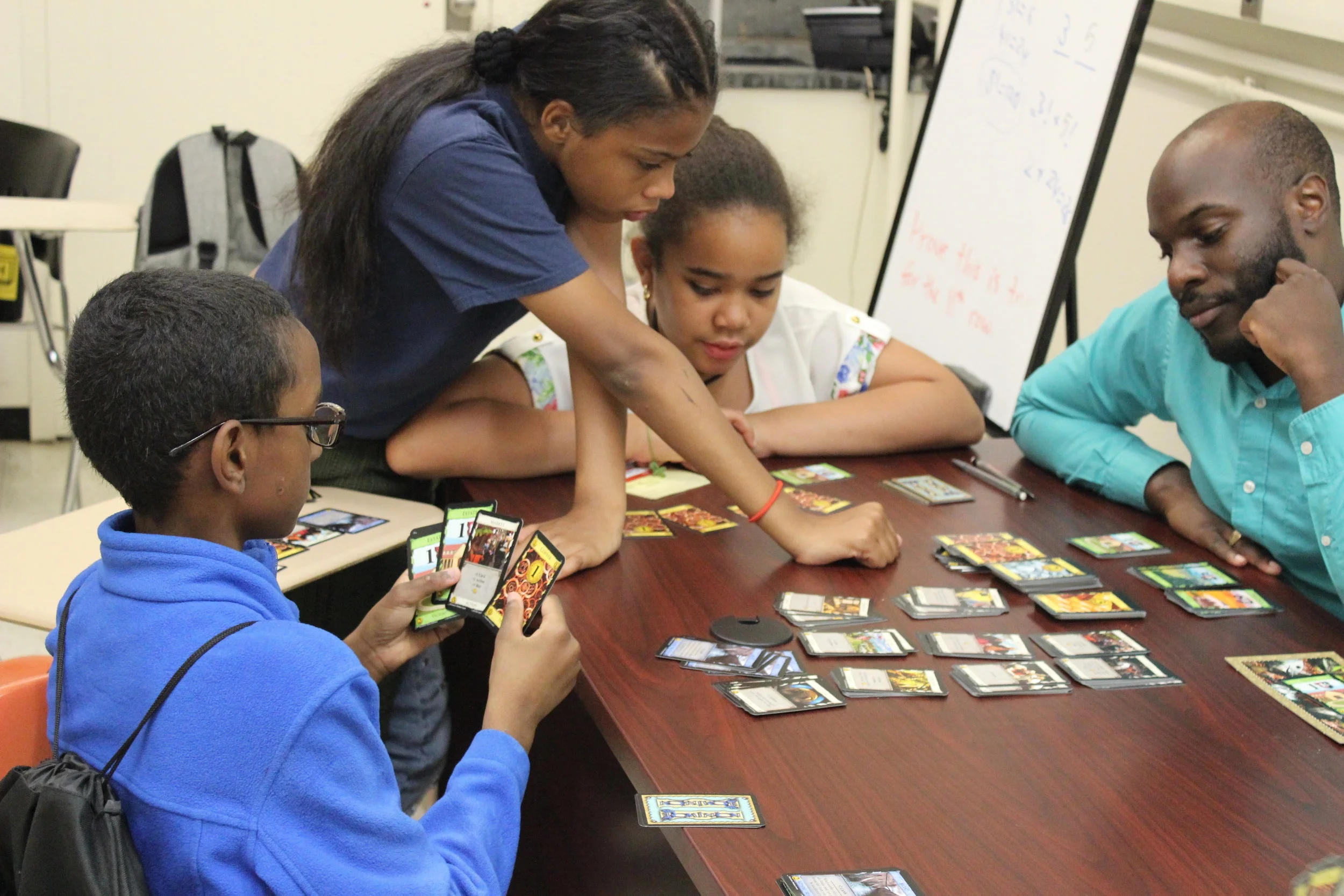
Others played board games, challenging their friends and counselors to Uno, Connect 4, Settlers of Catan, and more. Students were also excited by our science activity where Skittles and M&Ms were placed in water and their color slowly seeped out to create beautiful designs.


Doing math and more BEAM style
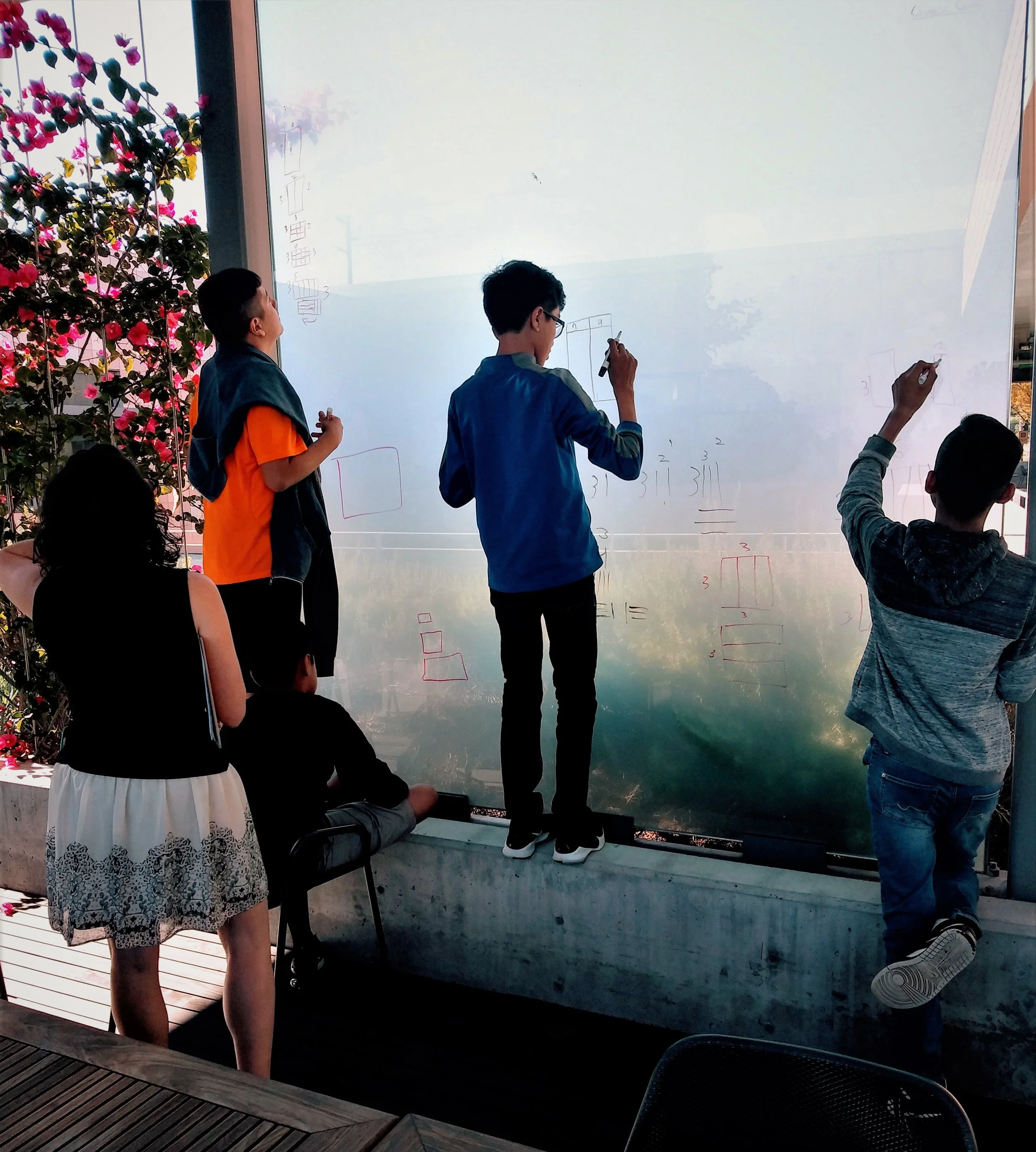
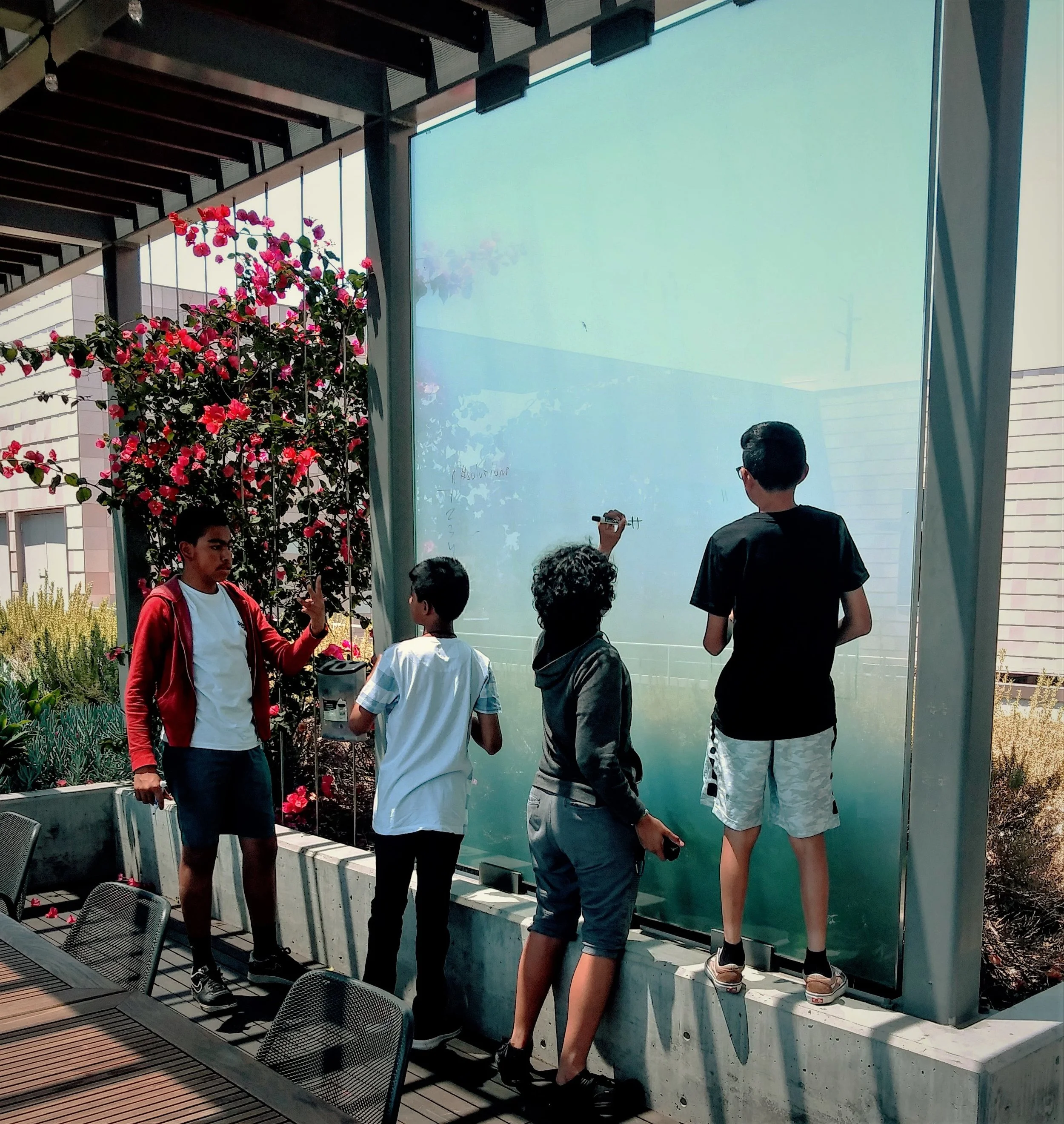
The birds are chirping, the sun is out, and math is in the air!!
The birds are chirping, the sun is out, and math is in the air — and on these really cool white boards (see pictures below)!
As week one winds down at Harvey Mudd College, the students at BEAM are not just adjusting but thriving! Everyday our young mathematicians are solving big math problems in unique ways.
Hot topics this week were completing their first proof Number Theory and learning how to find patterns with numbers in a Problem Solving Class. Students are eager to see the beautiful challenges that each new class brings.



BEAM Summer Away begins in California
BEAM Summer Away CA at Harvey Mudd College is off and running!
BEAM Summer Away California at Harvey Mudd College is off and running!
On Sunday, there was an excited energy as counselors and staff got to know students and their families. Next on our to-do list were dorm tours. Students were eager to pick out their bunk beds and unpack. Then, students explored the campus, reconnected with BEAM friends from last summer, and started making new friends.
Last, but definitely not least, the Rock, Paper, Scissors tournament kicked off with faculty and staff joining in!
Next up, the marvelous world of mathematics … Stay tuned to learn more!



BEAM's Pre-Summer Newsletter has arrived!
Today, BEAM's quarterly newsletter arrived in the inboxes of all our subscribers. The newsletter featured:
Information on our largest summer of operations yet
A recap of College Decision Day
Highlights from BEAM’s recent Career Day
“What We’re Reading”: a look at the College Board’s new “adversity score”
Recent accomplishments from BEAM students
A math puzzle for you to try out!
Missed it? You can read the newsletter now.
Make sure you don’t miss the next one! Sign up for our quarterly newsletter.

… And now for some math
At BEAM, we love sharing math! So, as a new feature of our quarterly newsletter, we’re introducing a math problem.
At BEAM, we love sharing math! So, as a new feature of our quarterly newsletter, we’re introducing a math problem.
Our first problem comes from one of BEAM’s Saturdays classes for 8th graders and high school students this past semester. In this class, on combinatorial game theory, students learned about different kinds of games, that it is possible to add games together and treat them (sort of) like numbers, and how all of a certain kind of games are equivalent to one particular game called Nim. If you want a taste of this, here’s a classic problem students considered at the beginning of class.
Suppose there are 25 tokens in a pile. On each turn, players alternate removing either 1 or 2 tokens, and they keep going until the pile runs out. The last person who takes a token wins. (It doesn't matter how many they took, just who gets to take the last one.) Which player has a strategy to guarantee that they win, and how do they do it?
The solution is below, so scroll down when you’re ready.
The solution …
The first player can win by moving to 24 tokens. Once they’re at a multiple of three tokens, they can always make sure that their next turn ends on the next lowest multiple of three. Here’s how: if their opponent takes 1 token, they take 2; if their opponent takes 2, they take 1. Then together, they take three tokens, so their next turn ends with 21 tokens.
They do this over and over to go down multiples of 3: 24, 21, 18, 15, 12, 9, 6, 3, and 0, and they win because they took the last token!
If you’re wondering how to figure this out, the trick is to think from the end. What happens with one token? Easy, the first player takes it and wins. Two tokens? The first player takes both and wins. Three tokens? Now the second player wins: the first player is forced to leave their opponent with 1 or 2 tokens, which their opponent can take and win.
That lets you build up. If you’re the first player with four tokens, take one piece and now it’s like you’re going second but with only three tokens. If you’re the first player with five tokens, take two, doing the same thing. But from six tokens, you’re stuck: you have to leave your opponent with four or five, which is a winning position for the next player to go.
If you want a challenge, try figuring out the same game, but instead of being able to take 1 or 2 tokens, you can take 1 or 4 tokens. Now what pattern emerges?
Want more math? If you are not yet receiving our quarterly newsletter, subscribe here.
Recruiting and Selecting BEAM Students: A First Hand Account
Today, we have a guest blog post from long-time BEAM volunteer, Maury Bohan, who is also a retired 6th grade math teacher. Maury accompanied our staff on an admissions school visit back in March and had the following to say about her experience. While BEAM’s admissions season is over (it runs January-March), we’re always thinking ahead to next year, when we can’t wait to meet 6th graders in Los Angeles and New York City who are applying to our entry level program, BEAM Discovery.
Early in March, on a Wednesday morning, I had the pleasure of joining Lynn Cartwright-Punnett at PS 171/Patrick Henry Preparatory School in East Harlem, which has been a BEAM partner school since 2014. I had wanted to participate in a visit to one of BEAM’s partner schools, and Lynn felt it would be beneficial if we used the visit as a chance to share details with our many volunteers, instructors, and supporters.

A 7th grader works on the Admissions Challenge.
We began the morning with eight 7th graders, two of whom attended last summer’s BEAM Discovery program. The goal was to check in on what the BEAM Discovery alumni were doing and also to identify any 7th graders who we had not met in 6th grade, who would benefit from joining our program, AND who could succeed despite not having attended last summer. Lynn shared the goals of the BEAM Pathway Program, which include “…going farther than you expect, learning more, and exploring new ideas.” In addition to the potentially overwhelming information that the students would be with BEAM all the way through college, she also tempted the young students with details about dorm life, field trips, and good, hard brain work. After responding to questions, Lynn handed out the Admissions Challenge — seven questions to be completed in 40 minutes, and explained that the goal is not to do all of it perfectly, but rather “to figure out what you can figure out.”

7th graders at another BEAM partner school, KIPP Infinity, tell their 6th grade colleagues about BEAM Discovery.
After the 7th graders left the room, we were joined by a new crew of about fifteen 6th graders. They were physically so much younger than the 7th graders — clearly still children — and obviously nervous. Lynn immediately put them at ease, asking what they already knew about BEAM Discovery — basically that it is a summer math program five days per week for five weeks. She shared the daily schedule, and the goal to challenge brains, to grow and do more than students could do before, and to be a member of a math-loving community. Again there was talk of preparation for college, in terms of how choosing courses and activities during the summer is a way to start building autonomy so as to eventually be ready for decision making in college. Lynn then handed out the Admissions Challenge, and reminded students that “The goal isn’t perfect work; it’s interesting work.”
Besides the results of the students’ work on the Admissions Challenge, there are a few other ways for them to demonstrate their potential as a BEAM student. They are all asked to share how they felt about the challenge and what they liked about it. They are also given some extra problems to do at home and send back, which can show readiness and interest, and allow students to perform while not under time pressure.
There is a third way that a student might earn some unofficial points toward gaining a slot in a BEAM program, and it was demonstrated after the sixth graders left us. Lynn earlier had an opportunity to quickly review the 7th graders’ responses to their Admissions Challenge and had asked the school contact person to bring one student back to our classroom for an interview. This would allow Lynn to ascertain whether the student is as ready for this summer’s 7th grade program as all the incoming alumni of last summer’s Discovery Program will be. I enjoyed listening first as the two of them chatted about school and math, and the student’s personal life. She shared that her life outside of school is mostly homework, supporting a younger sister’s homework, and church. She has never been outside of New York City, and wants to be a veterinarian when she grows up. What is she most concerned about in regards to BEAM’s summer program? That it is a sleep away program!
After chatting, Lynn and the student got down to work, discussing some great math problems. How encouraging it was for me to observe their back and forth, and the young lady’s willingness to draw conclusions, and then re-evaluate them given Lynn’s prodding. The student’s patience, persistence, and flexible thinking seemed to me qualities that will make her succeed, and that BEAM would benefit from. And this is where those unofficial points toward entrance come in to play. “Slant points” are like an additional note, one which this girl definitely received, that says if there is a tie for a slot at BEAM, this student has that “something extra” that makes her the preferred candidate.
As a retired teacher, I can’t imagine many more encouraging mornings than watching all of these 6th and 7th graders voluntarily meeting with a stranger to demonstrate their interest and talent in mathematical thinking. I can’t wait to hear which students are joining us this summer, and I look forward to seeing them grow and thrive through high school.

Maury works with Alberto and Rebecca on trivia questions at BEAM’s annual night of puzzles and trivia.